Poland opens new R&D centre for defence technology
Defence Minister Wladyslaw Kosiniak-Kamysz along with his deputy, Cezary Tomczyk, signed an agreement on Thursday to launch the Autonomous Systems Centre (OSA), an umbrella institution tasked with testing and implementing latest military technology innovations.
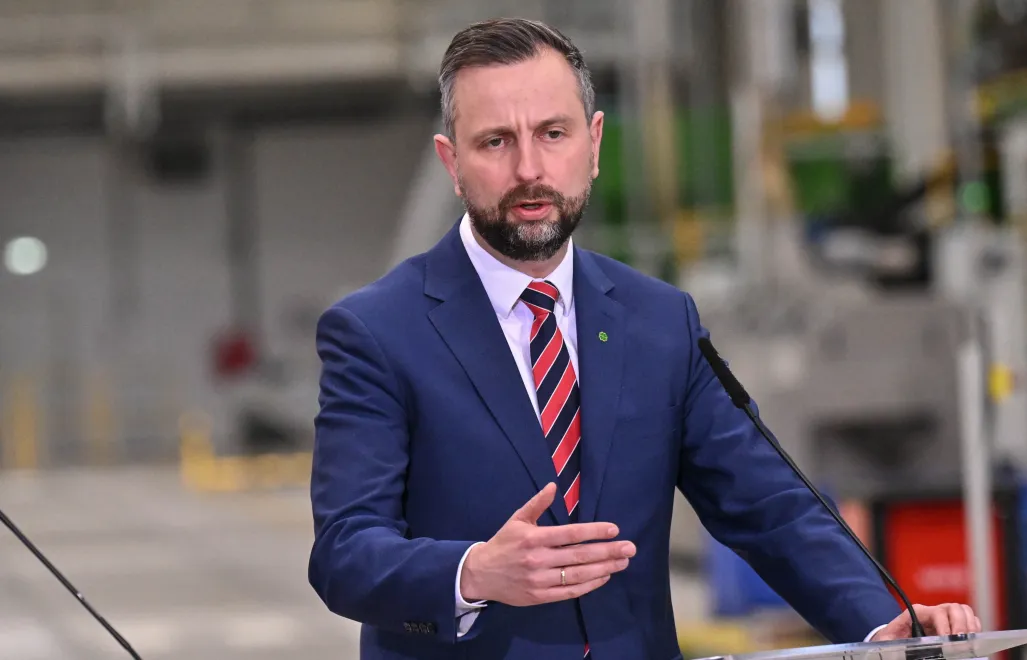

Kosiniak-Kamysz told a press conference that OSA, located in Warsaw, will merge the potential of Polish military research institutes, the defence industry and the armed forces, ensuring that a wide range of defence technology innovations are put into practice and production.
"OSA, which launches today, is tasked with quickly transferring ongoing research and innovations — from small companies, scientists and enthusiasts — to the military for testing, and rolling out mass production if they meet our needs and expectations," he said.
OSA will operate as both a research and an industrial centre. It has been established by Polish military research institutes, the state-owned IDEAS Research Institute and Polish Armaments Group S.A., under the leadership of the Air Force Institute of Technology.
Among its tasks will be testing and validating the operational capabilities of unmanned systems, including Poland's first Shahed-type aerial drone, whose development is nearing completion. Bringing this project into service will be OSA's first assignment, Kosiniak-Kamysz said.
Tomczyk added that in 2026, Poland plans to spend PLN 25 billion (EUR 5.8 bln) on unmanned systems for its armed forces, including PLN 15 billion (EUR 3.5 bln) on anti-drone defences along the country's eastern border.
"This amounts to 25 billion zlotys for contracts... under the SAFE programme [of EU-sponsored defence loans]," he said, noting that the scale of funding clearly illustrates the programme's significance for Poland when compared with spending on unmanned systems in previous years.
According to the deputy minister, last year Poland allocated PLN 700 million (EUR 164 mln) for the purchase of this type of weaponry, while in 2024 it was PLN 300 million (EUR 70 mln) and only PLN 100 million (EUR 23 mln) in 2023. (PAP)
wpb/jch