Poland signs contract for major anti-drone system dubbed San
Poland has signed a contract with an international consortium to build an integrated counter-unmanned aerial system, dubbed 'San' to address growing drone threats along the country's eastern border.
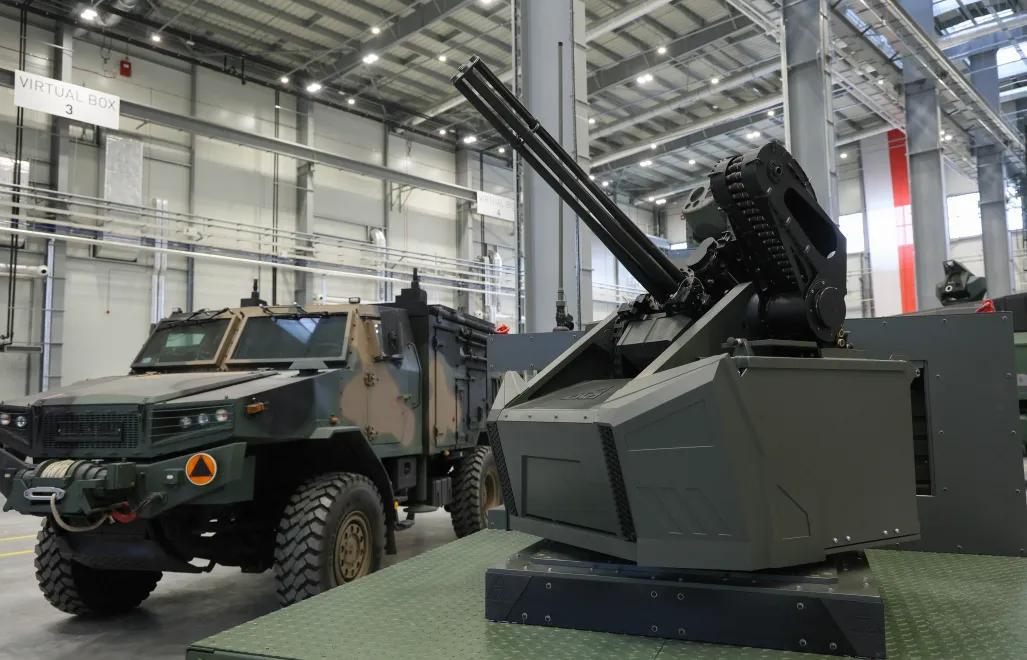
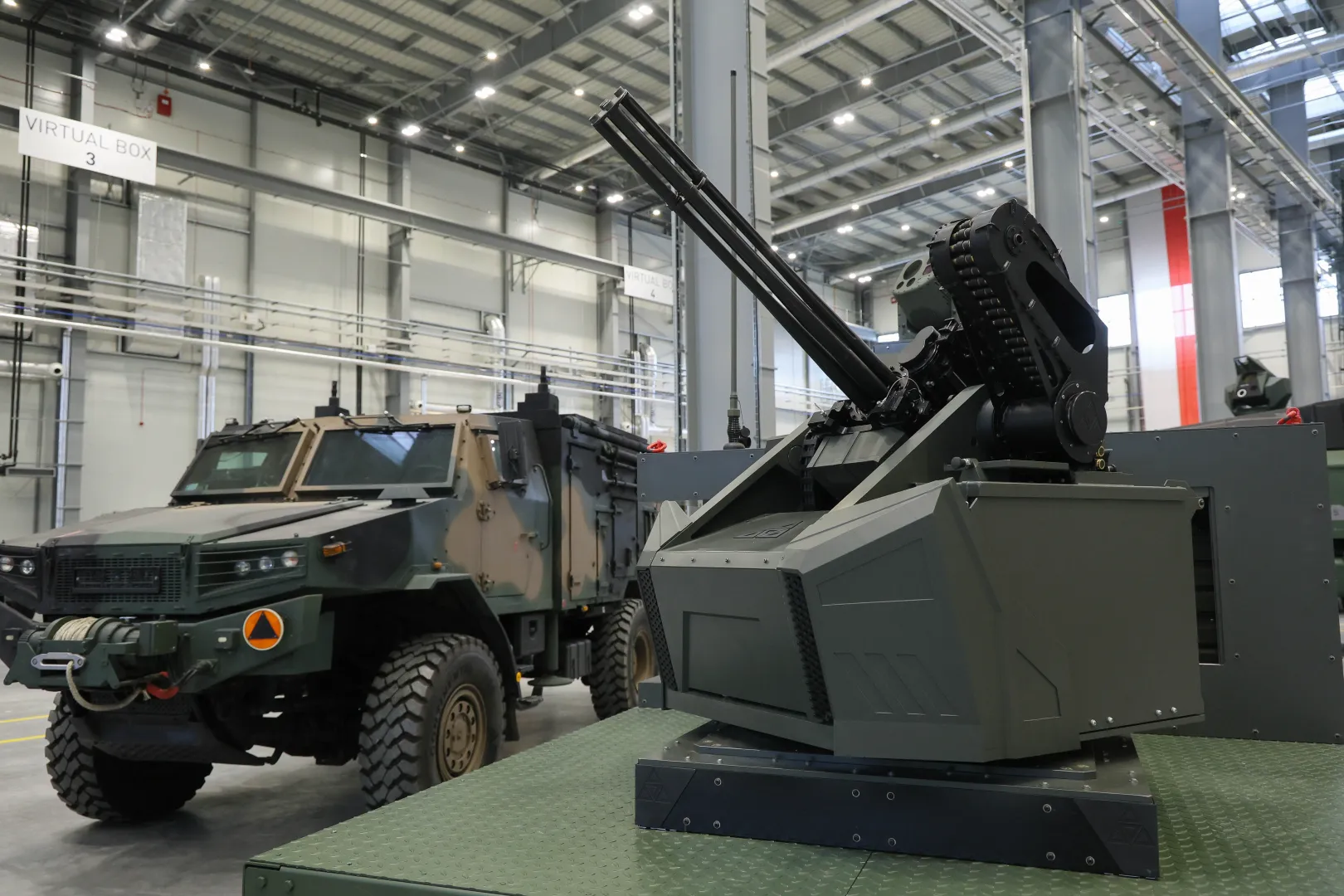
The deal was signed on Friday morning between the Polish defence ministry's Armaments Agency, responsible for the purchase of military equipment, and a consortium composed of the Polish Armaments Group (PGZ), a private Polish company APS, a supplier of counter-UAS technologies and Norwegian defence contractor Kongsberg Gruppen.
The ceremony, held in Kobylka near Warsaw, at the plant of PIR-Radwar, owned by PGZ, was attended by Prime Minister Donald Tusk and Deputy Prime Minister/Defence Minister Wladyslaw Kosiniak-Kamysz.
"Today, we are creating this unprecedented system, the most modern of its kind," Tusk said. "There is no other example in Europe today of such an integrated, intelligent defence system, primarily for countering drones."
He went to recall the most serious aerial incident in Poland to date, when about 20 Russian decoy drones violated Polish airspace in September last year.
"These first encounters with drone aggression showed how inadequate fighter jets and missiles are for shooting down drones," Tusk said, referring to the high cost of such operations.
The San system, he said, allows Poland "to respond to various types of aerial aggression in a much more effective, cheaper and smarter way."
Tusk called the signing of the agreement a historic moment that strengthens Poland's defence capabilities.
"We are witnessing an absolute breakthrough when it comes to effective and efficient defence of Poland's, Europe's and NATO's eastern border, and this is in the most vulnerable aspect, air defence, primarily defence against modern techniques of aggression," the prime minister said.
He expressed satisfaction that the Polish Armaments Group is the leader of the initiative, stressing the importance of investing in domestic defence companies, but also praised the consortium's Norwegian partner, Kongsberg Gruppen.
"It is not only an expression of our appreciation for the extraordinary competence of our Norwegian partners, but it is also part of the new security architecture that Poland initiated less than two years ago, focusing its efforts on ensuring coordination between countries that bear direct responsibility for security on the border with Russia and Belarus," Tusk said. "That is why we cherish the relations that have developed between the Baltic and Scandinavian countries and Poland."
The prime minister said that later in the day he was set to meet with his counterparts from Croatia, Germany, Greece, Latvia and Portugal as well as with top EU officials in the Croatian capital Zagreb to discuss "the European dimension of the Shield East and the San programme."
Under the Shield East initiative, Poland has been constructing extensive defence infrastructure near its borders with Russia and Belarus.
"I will strongly emphasise once again that this task... of securing the eastern border is crucial for the security of Poland and Europe, it is the responsibility of the whole of Europe and the whole of NATO," he said.
Leaders of the European People's Party, the biggest grouping in the European Parliament, are due to hold a two-day meeting in Zagreb on Friday and Saturday.
Kosiniak-Kamysz provided more details on the new system, saying that San will comprise 18 anti-drone battery systems and more than 700 vehicles.
"All this means that we will have a significant impact on the threats coming from the east," he said.
The San system is designed to detect and neutralise hostile unmanned aerial vehicles (UAVs). It utilises anti-aircraft battery modules equipped with smart ammunition, jamming, and radar sensors. The entire project is expected to be completed within two years, and its cost, according to unofficial reports, is estimated at close to PLN 15 billion (EUR 3.56 bln).
The contracted counter-drone system will be deployed along Poland's eastern border and the initiative is linked to a series of Russian drone incursions that have penetrated Polish [and NATO] airspace.
It will complement a multi-tier integrated air defence system being developed by Poland, which includes the Wisla programme with American medium-range Patriot systems, the Narew programme based on British short-range (around 20 km) CAMM missiles, and the very short-range Pilica and Pilica+ programmes, based on Polish guns, Grom and Piorun missiles, and in the future also CAMM missiles. (PAP)
mmr/jch