Polish reservist training needs improvement - defence minister
Poland has "a lot to catch up on" when it comes to the reservist training system and the attractiveness of this form of service, Defence Minister Wladyslaw Kosiniak-Kamysz said in Thursday's interview with PAP, AFP and dpa.
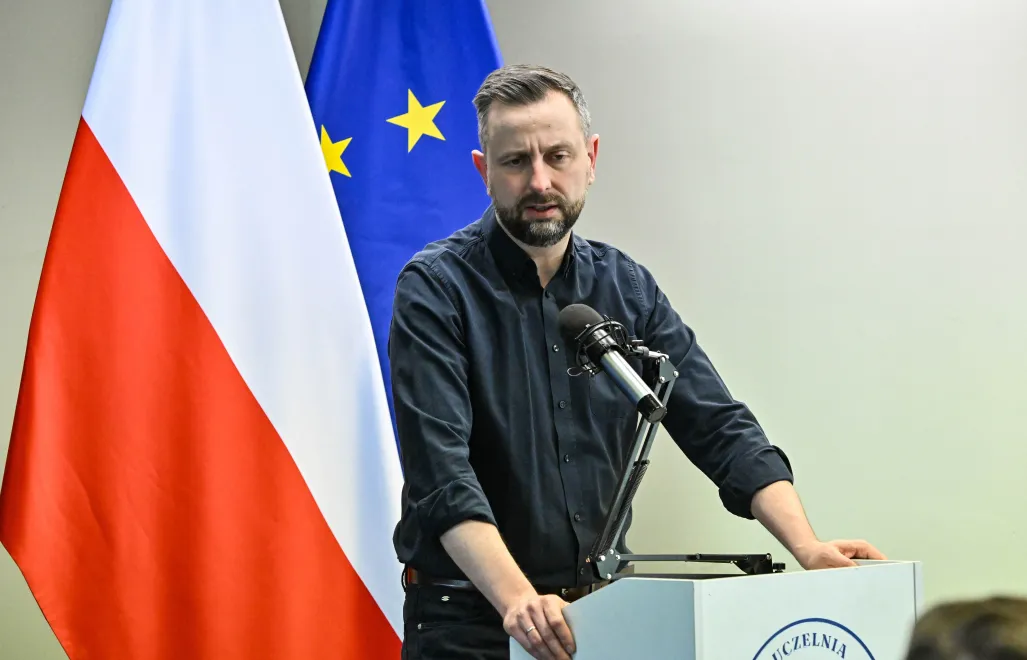

Asked about the future of the Polish Armed Forces in the context of a deepening demographic crisis and growing demand for highly qualified specialists, Kosiniak-Kamysz said Poland's demographic situation is poor and noted that it is no longer possible to influence, for example, how many people who will come of age over the coming years will consider joining the army.
He argued that making military service more attractive is therefore crucial, including through the location of units as close as possible to soldiers' places of residence and their balanced distribution across the country.
"And the foundation is also security for families. There are ideas here, a military family card, a uniformed services family card, various kinds of benefits not only for those serving in the army, men or women, but for entire families," he said.
The minister argued that building military reserves is of key importance, recalling that plans for the development of the Polish Armed Forces assume an effective strength of 500,000 people, including 300,000 soldiers in active service, among them 250,000 in operational forces and 50,000 in the Territorial Defence Forces, as well as 200,000 high-readiness reservists.
"The year 2026 will be the year of the reserve, of modifying the reservist training system and increasing the attractiveness of this service. We have a lot to catch up on here. There is still untapped potential that we cannot waste, given demographic changes," he said.
Kosiniak-Kamysz also said there are too few officers and non-commissioned officers in the Polish Armed Forces, adding that their numbers are clearly lower than in countries such as the US.
"We are doing everything that is justified to strengthen the officer corps," he said, pointing to plans to increase the number of places at officer training schools and to establish new non-commissioned officer schools, including ones intended for civilians.
He also spoke about rapid technological change in the military, including at the level of the individual soldier. "Various robots that we have seen in science fiction films will operate on the battlefield. Today, every soldier has a rifle, a helmet or a bulletproof vest; soon they will also be equipped with drones, launched by hand, for defensive or offensive tasks," he said, adding that "the next five years will also bring such a revolution."
According to the minister, artificial intelligence will also play an increasingly important role in the management of armed forces. "It will change all armies. It has already changed the Ukrainian army, which would not have survived without this technology and would not have been able, for example, to use the equipment that was delivered to it," he said, explaining that this applies to battlefield management, coordination of equipment operations, logistics and military training. (PAP)
mj/mf