Polish PM says he shares farmers' opinion on EU-Mercosur deal
Donald Tusk, the Polish prime minister, has said that he understands the emotions of farmers protesting in Warsaw and shares their opposition to the landmark EU-Mercosur trade agreement.
Polish farmers staged a protest in Warsaw on Friday against the deal between the European Union and the South American Mercosur bloc countries.
At noon on Friday, EU sources reported that a qualified majority of European Union nations had agreed to advance the deal, paving the way for its signature, despite strong opposition from several counties including Poland.
According to one source, Poland, France, Ireland, Hungary and Austria voted against the deal, while Belgium abstained. The vote took place at a meeting of EU member state ambassadors in Brussels.
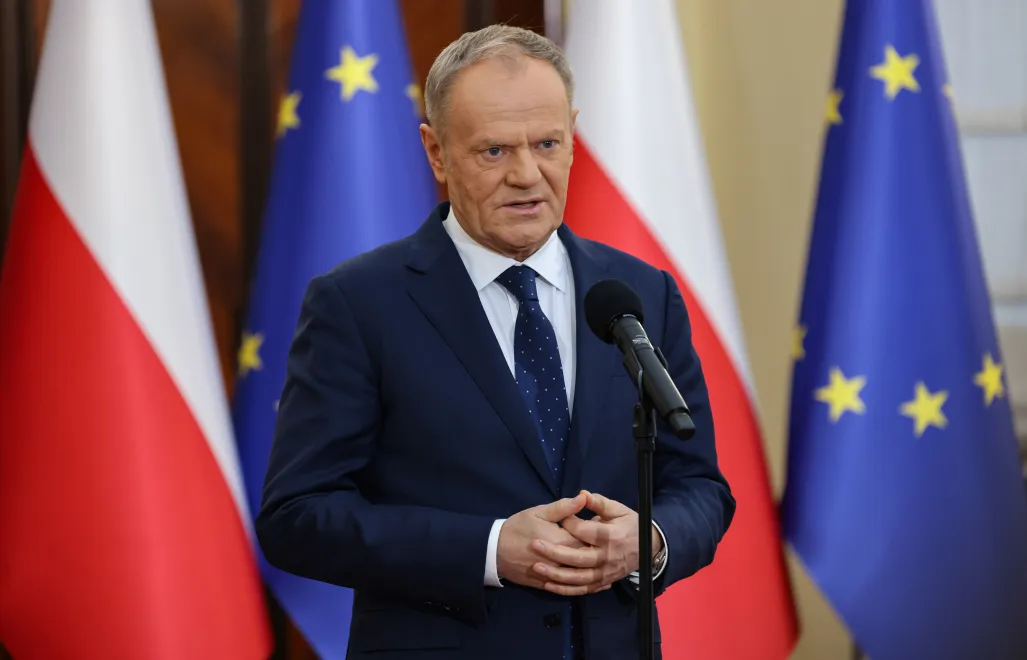
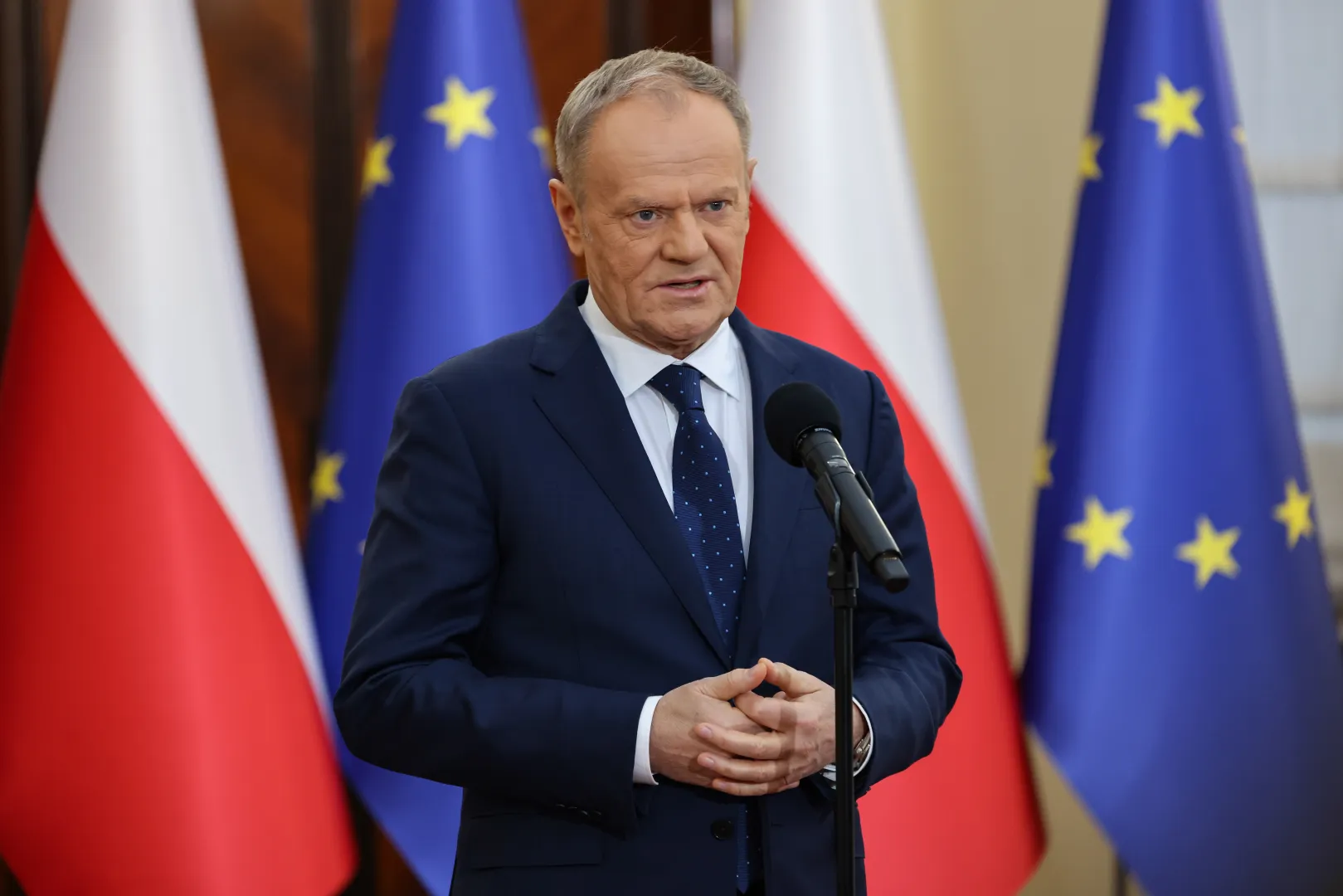
Tusk told a press conference later on Friday that his government shared the same opinion about the deal as the protesting farmers.
"We had been voting against the agreement on every stage, we did it even during the last vote," Tusk said, adding that he understood the emotions driving the farmers protests.
He also accused Poland's former ruling party, Law and Justice (PiS), now the main opposition, for failing to stop or delay the deal, saying that "it bears responsibility for the Mercosur deal."
"They had both the time and opportunity... to weaken this process, delay it or even halt it," Tusk said, adding that, instead, they did nothing.
"My government managed to introduce a protective clause, owing to which farmer interests have been protected to a large extent," he added.
Referring to his meeting with President Karol Nawrocki, Tusk said that they had not discussed the EU-Mercosur deal but added that "someone (Nawrocki - PAP) had obliged himself to convince the Italian prime minister to change Italy's position as its 'no' was needed to block the deal."
"I have fulfilled my task, the Polish government voted against along with some of our allies in the European Council, but this was not enough," he said.
Italy, which had opposed the deal in December, shifted its position on Friday and voted in favour. "It seems to me the balance that has been found is sustainable," Italian Prime Minister Giorgia Meloni explained.
This clears the way for Commission President Ursula von der Leyen to sign the agreement with Mercosur partners - Argentina, Brazil, Paraguay and Uruguay, possibly next week in Asuncion.
In an effort to reassure sceptical member states, the European Commission has introduced safeguards allowing the suspension of imports of sensitive agricultural products. It has also strengthened import controls, notably regarding pesticide residues, established a crisis fund, accelerated support for farmers and pledged to cut import duties on fertilisers.
On Friday evening, a delegation of protesting farmers said they would not leave the Prime Minister's Office unless they were granted a meeting with Donald Tusk.
"After being informed that there would be no meeting with the prime minister, the farmers' delegation decided not to leave the building until it is received by the head of government," Damian Murawiec, a representative of one of the organisations staging the protest in Warsaw, told PAP.
He added that there were plans to set up a tent camp outside the Prime Minister's Office to support the farmers occupying the building.
The delegation of farmers remaining inside the building is led by Slawomir Izdebski, the leader of the All-Poland Alliance of Farmers' Trade Unions and Farmers' Organisations.
Later on Friday evening, Adam Szlapka, the government spokesman, told PAP that the protesting farmers had left the building. (PAP)
at/jch