Poland makes further arrests in international migrant smuggling case
Polish police and border guards have detained six more suspects in a major international investigation into migrant smuggling and drug trafficking from the Middle East to Europe.
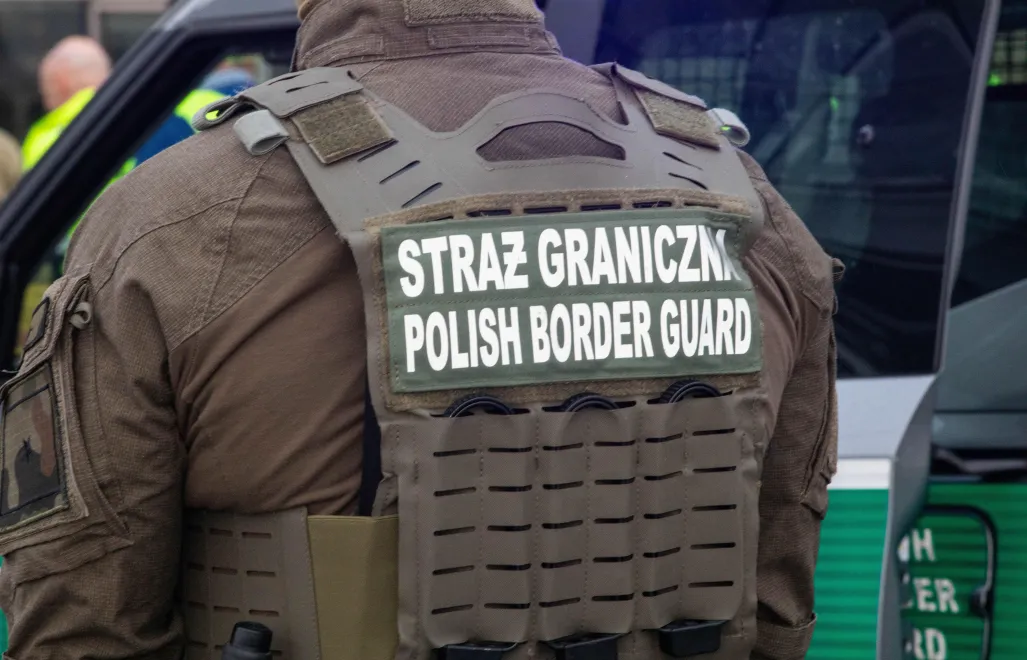

Police Headquarters in Katowice, southern Poland, said on Wednesday that operations carried out in the Slaskie and Malopolskie provinces, in cooperation with Europol, had helped disrupt a key migrant smuggling route from the Middle East to Europe and strengthen the protection of the Schengen area's external borders.
The suspects include two women aged 26 and 31, and a 34-year-old man from Swietochlowice, a 48-year-old man from Ruda Slaska, a 50-year-old man from Myslowice and a 31-year-old man from Krakow.
They face charges including participation in an organised criminal group, money laundering, large-scale drug trafficking and possession, and facilitating illegal border crossings.
According to Katarzyna Calow-Jaszewska of the National Prosecutor's Office, the suspects admitted to the charges and provided statements. The court imposed preventive measures including bail, police supervision and bans on leaving the country.
The arrests are part of a broader investigation into a transnational criminal network operating across several European countries. Investigators have identified links between the group and football hooligan circles associated with clubs in Poland's Silesia region. A total of 27 people have now been charged in the case.
Katowice police said officers from its Department for Combating Hooliganism joined Operational Taskforce Vistula, a multinational initiative involving Poland, Slovakia, the Czech Republic, Hungary, Germany, Lithuania, Latvia, Estonia, Ukraine and Austria, working closely with Europol to dismantle organised migrant-smuggling networks.
Investigators believe the criminal group had been active since at least 2023. In addition to smuggling migrants, it allegedly manufactured and trafficked drugs from the Netherlands to Poland and onward to Sweden and other destinations outside the European Union.
The first major operation against the network took place in May 2025, when Polish authorities arrested eight suspects, while seven others were detained in Belgium and Germany. According to investigators, the group was responsible for moving hundreds of migrants along the Balkan route—from Serbia through Croatia, Austria, the Czech Republic and Poland to Germany — as well as trafficking tonnes of narcotics across Europe. (PAP)
mj/jch