President deepens clash with gov't over Poland's judiciary
Karol Nawrocki, Poland's right-wing president, has refused to appoint 46 judges, marking another escalation in his ongoing dispute with the centrist government of Prime Minister Donald Tusk.
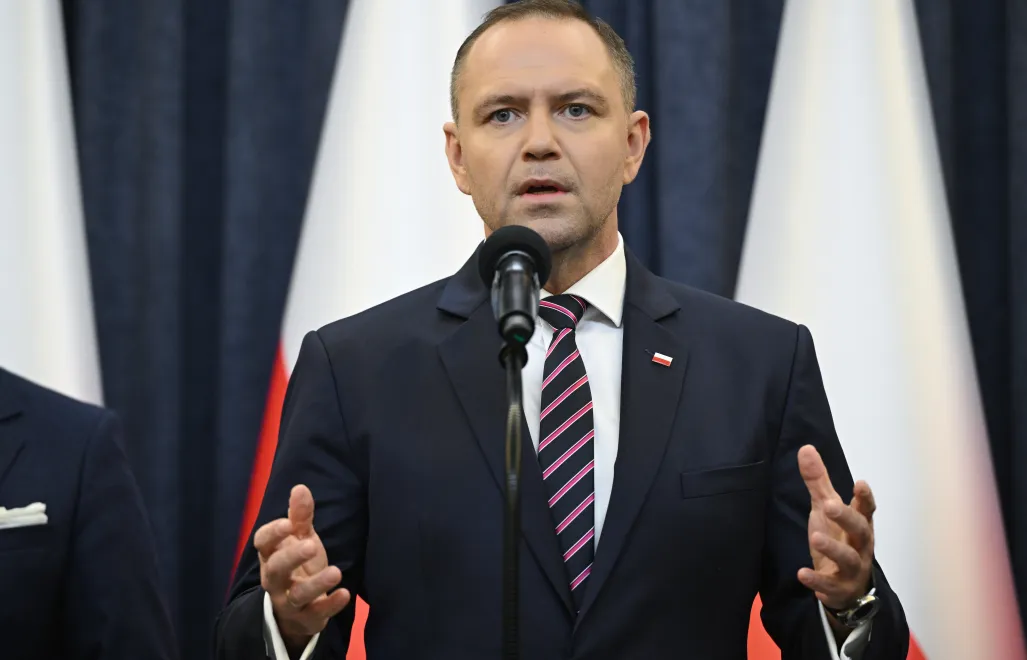
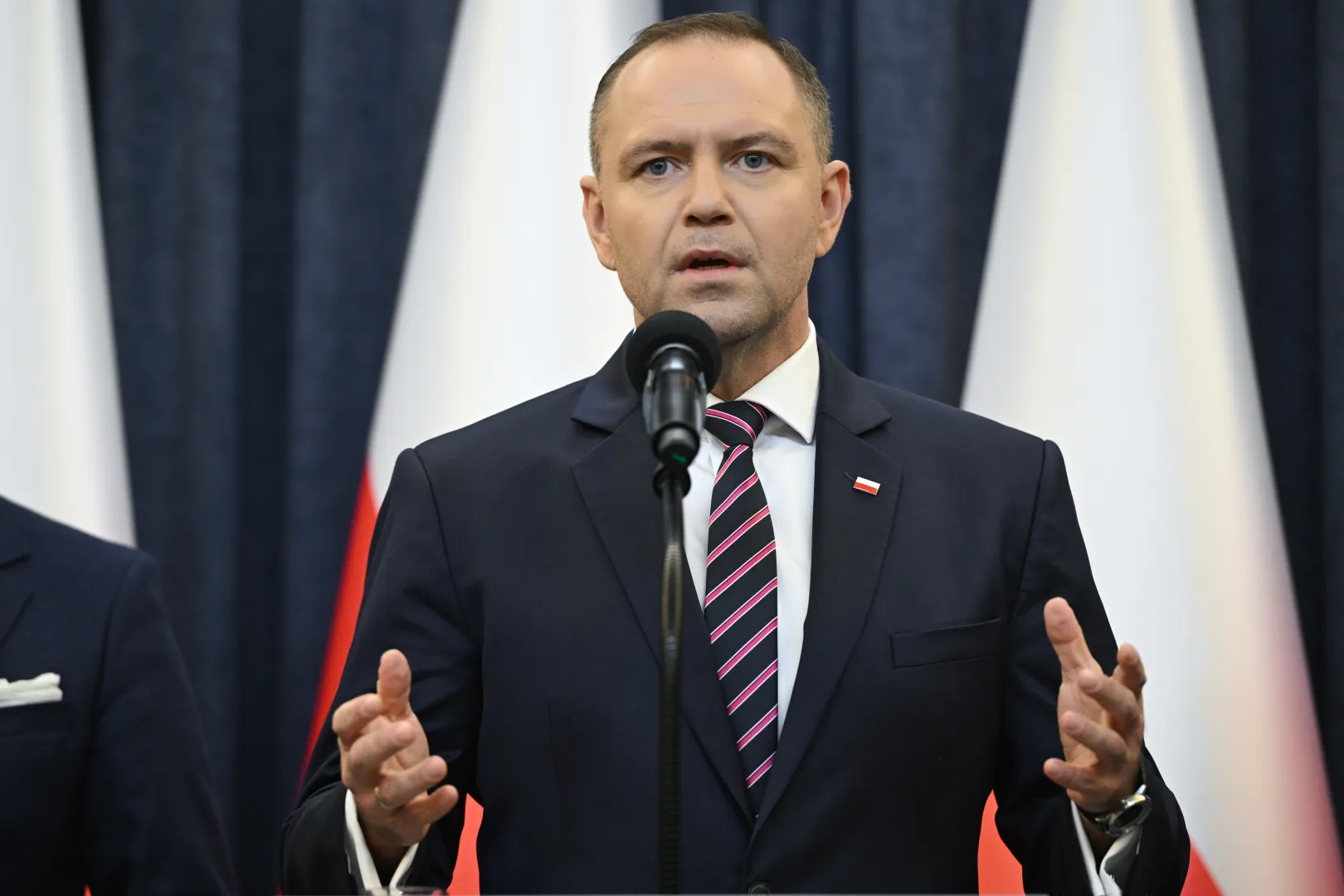
"I refuse to appoint 46 judges," Nawrocki announced on Wednesday, declaring that throughout his five-year term, he would block promotions for judges who, in his words, "question the constitutional and legal order of the Republic of Poland."
Nawrocki, backed by the former ruling party, the socially-conservative Law and Justice (PiS), began his term of office in August by vetoing several government bills. He maintains that the PiS judicial reforms, which are criticised by both the current pro-EU government and European institutions as violating the rule of law, are legitimate and democratic.

In his statement, Nawrocki cited a Constitutional Tribunal ruling from 2012 affirming the president's authority to appoint judges and the right to refuse nominations.
"So today I'm exercising this right," he said. "I refuse to appoint 46 judges. This is no longer just a verbal signal, ladies and gentlemen, but a specific decision not to grant appointments."
He also issued a warning to current members of the judiciary: "Neither will I promote those judges who question the constitutional and legal order of the Republic of Poland."
Nawrocki went on to accuse Justice Minister Waldemar Zurek of inciting judges to such "questioning."
Adam Szlapka, the Polish government's spokesman told a press conference on Wednesday afternoon, that the president's announcement demonstrates "an attempt to usurp powers."
He said that the judiciary in Poland must be independent of other authorities
"Judges are independent, courts are independent. And any attempt to question this is simply usurpation and an attempt to undermine, one might say, the justice system in Poland," Szlapka added.
He was apparently referring to the fact that under the PiS government many judges, particularly to the National Council of the Judiciary (KRS), the body responsible for nominating judges, and the Constitutional Tribunal, the country'stop court, were elected by the lower house of parliament, the Sejm.
This was a significant change from previous systems as it shifted the power of appointment from peer-based or other bodies to the political majority in parliament. Critics argued this politicised the judiciary and led to the appointment of judges perceived as politically loyal to the ruling party, sometimes referred to as "neo-judges."
"Judges have the right, and there are judgements on this from both Polish and European courts, to question the status of other judges through rulings," Szlapka further argued.
"So what the president said in his statement is de facto an attempt to question the constitutional principles of the independence of judges and the independence of courts - he added.
The head of the President's Office Zbigniew Bogucki further argued during Wednesday's press conference that appointing and refusing to appoint judges is the exclusive prerogative of the president, which President Nawrocki exercised.
Later that day, Justice Minister Waldemar Zurek also commented on the issue.
"If it was only the president who could independently decide who may became a judge in Poland, the chapter on the National Council of the Judiciary would have to be removed from the Polish constitution altogether," he told reporters.
"Then we would leave everything in the president's hands. That's not the case in our system," Zurek added.
He further said that, if the grounds for the president's refusal to appoint 46 judges prove to be extra-statutory and extra-constitutional, then "the president is entering into some kind of dispute here, where he can usurp powers that the constitution does not grant him."(PAP)
jd/jch/mmr/mf/ grg/